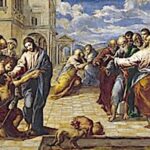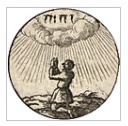
Illustration: priesthood of all believers
Pope Leo’s Catechesis on The Documents of Second Vatican Council
II. Dogmatic Constitution Lumen gentium. (The light of the Nations)
4. The Church, a Priestly and Prophetic People
St Peter’s Square – Wednesday, 18 March 2026
Scripture reading: 1Peter 2:9-10
9 But you are a chosen race, a royal priesthood, a holy nation, God’s own people, that you may declare the wonderful deeds of him who called you out of darkness into his marvelous light.
10 Once you were no people but now you are God’s people; once you had not received mercy but now you have received mercy.
Pope Leo’s Catechesis
Dear brothers and sisters,
Today I would like to chapter two of the conciliar constitution Lumen gentium, which is devoted to the Church as the people of God.The Messianic People, receive participation in Christ’s priestly, prophetic, and kingly work, through which his salvific mission is carried out..
The Council Fathers teach that, through the new and eternal covenant, the Lord Jesus established a kingdom of priests and constituted his disciples as a ‘royal priesthood’
1 Peter 2:9 – you are a chosen race, a royal priesthood, a holy nation, God’s own people, that you may declare the wonderful deeds of him who called you out of darkness into his marvelous light.;
1 Peter 2:5 – like living stones be yourselves built into a spiritual house, to be a holy priesthood, to offer spiritual sacrifices acceptable to God through Jesus Christ.;
Revelations 1:6).
This common priesthood of the faithful is received at baptism and enables us to worship God in spirit and truth.
It also enables us to “confess before men the faith which they have received from God through the Church” (Lumen gentium, 11).
Furthermore, through the sacrament of Confirmation, all the baptized “are more perfectly bound to the Church … and the Holy Spirit endows them with special strength, obliging them more strictly to spread and defend the faith by word and deed as true witnesses of Christ.
This consecration is at the root of the common mission that unites the ordained ministries and the lay faithful.
In this regard, Pope Francis observed that, “Looking at the People of God is remembering that we all enter the Church as lay people. The first sacrament, which seals our identity forever, and of which we should always be proud, is Baptism. Through Baptism and by the anointing of the Holy Spirit, (the faithful) ‘are consecrated as a spiritual house and a holy priesthood’ (LG, 10), [so that] everyone forms the faithful Holy People of God”
(Letter to the President of the Pontifical Commission for Latin America, 19 March 2016).
The exercise of the royal priesthood occurs in many ways, all of which are aimed at our sanctification. First and foremost, this occurs through participation in the offering of the Eucharist.
Through prayer, asceticism and active charity, we thus bear witness to a life renewed by God’s grace (Lumen gentium, 10).
As the Council summarizes, “it is through the sacraments and the exercise of the virtues that the sacred nature and organic structure of the priestly community is brought into operation” (Lumen gentium, 11).
The Council Fathers then teach that the Holy People of God participate in Christ’s prophetic mission (Lumen gentium, 12).
In this context, the important theme of Sensus fidei (sense of the faith) and the Consenses fidei (consensus of the faithful are introduced.
The Council’s Doctrinal Commission specified that this Sensus fidei “ is like a faculty of the whole Church, by which she recognizes the revealed truth in her faith, distinguishes between true and false in matters of faith, and penetrates and applies it more deeply in life” (Acta Synodalia, III/1, 199).
Therefore the sense of faith belongs to individual believers not in their own right, but as members of the People of God as a whole.
Lumen gentium focuses on the latter aspect and relates it to the infallibility of the Church which is inherent to and served by that of the Roman Pontiff.
“The entire body of the faithful, anointed as they are by the Holy One (1 John 2:20, – 20 You have been anointed by the Holy One, and you all know.[a] . . . the anointing which you received from him abides in you, and you have no need that any one should teach you; as his anointing teaches you about everything, and is true, and is no lie, just as it has taught you, abide in him)
They manifest this special property by means of the whole peoples’ supernatural discernment in matters of faith when from the Bishops down to the last of the lay faithful they show universal agreement in matters of faith and morals” (Lumen gentium, 12).
Therefore, the Church, as the communion of the faithful – which naturally includes the pastors – cannot err in matters of faith/
The organ through which this truth is preserved, founded on the anointing of the Holy Spirit, is the supernatural sense of faith of the entire People of God, which is manifested in the consensus of the faithful.
From this unity, safeguarded by the Church’s magisterium, it follows that every baptized person is an active agent of evangelization.
They are called to bear consistent witness to Christ accordance to the prophetic gift bestowed upon the entire Church by the Lord.
Indeed, the Holy Spirit, who comes to us from the risen Christ, “distributes special graces among the faithful of every rank.
Through these gifts, he prepares them to carry out the various tasks and responsibilities that contribute to the renewal and growth of the Church” (Lumen gentium, 12).
Consecrated life is a particular demonstration of this charismatic vitality, continually germinating and flourishing through the work of grace.
Ecclesial associations are also a shining examples of the variety and fruitfulness of spiritual gifts that edify the People of God.
____________________________________________________
Summary of the Holy Father’s words:
Dear brothers and sisters,
In our continuing catechesis on the Second Vatican Council, we will now consider the participation of the faithful in the priestly, prophetic and royal offices of Jesus Christ, as presented in the Dogmatic Constitution Lumen Gentium.
Through the sacrament of baptism, we are called to share in Christ’s royal priesthood and to worship him in spirit and truth, especially through our participation in the Eucharist.
We also partake in Jesus’ prophetic mission, because we are called to bear witness to the truth of the faith.
The Council Fathers taught that “the whole body of the faithful … cannot be mistaken in belief. It shows this characteristic through the entire people’s supernatural sense of faith when, from the bishops to the last of the faithful, it manifests a universal consensus in matters of faith and morals” (Lumen Gentium 12).
Along with these gifts shared by all members of the Church, the Holy Spirit continues to bestow special graces upon the faithful to enrich and build up the body of Christ.
It is important that we recognize these manifold gifts and express our gratitude to God for allowing us to be participate in his work of salvation.