Pope Leo’s General Audience,
Paul VI Hall- Wednesday, January 7, 2026
This is the first of series of catecheses on the Second Vatican Council
Introductory Catechesis – in the light of its Documents.
Scripture reading: Hebrews 13:7-9
Brothers and Sisters, remember your leaders, those who spoke the word of God to you;
consider the outcome of their life, and imitate their faith.
Jesus Christ is the same yesterday and today and forever.
Do not be carried away by all kind of strange teachings.
Pope Leo’s General Audience,
Brothers and Sisters,
Following the Jubilee Year, during which we reflected on the mysteries of Jesus’ life, we will have a new series of catecheses devoted to the Second Vatican Council and the rereading of its Documents.
This is a valuable opportunity to rediscover the beauty and significance of this ecclesial event.
John Paul II, at the end of the Jubilee Year 2000, stated: “ “I feel a strong sense of duty to present the Second Vatican Council as a great blessing for the Church in the 20th century”.
In 2025, we celebrated the sixtieth anniversary of the Second Vatican Council with the anniversary of the Council of Nicaea.
Although this event is not too far in the past, the generation of bishops, theologians, and faithful who experienced the Second Vatican Council are no longer with us.
Therefore, in order to avoid silencing his prophecy and to continue seeking ways to realize his vision, it is important to familiarize ourselves with his documents and reflect on their content, rather than relying on rumors or interpretations. In fact, the Magisterium continues to guide the Church’s journey today.
As Benedict XVI taught: “With the passage of the years, the conciliar documents have not lost their relevance. On the contrary, the teaching contained in them is particularly important in the light of the new needs of the Church and of today’s globalized society” (Mass in the Sistine Chapel at the end of the conclave,20 April 2005).
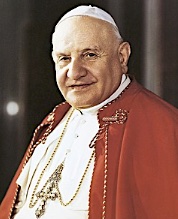
On October 11, 1962. Pope John XXIII opened the Council’s deliberations
He spoke of the Council as the dawn of a luminous day for the entire Church.
The work of the many bishops, hailing from churches across the globe, paved the way for a new era in the Church’s history.
Following rich biblical, theological, and liturgical reflections throughout the twentieth century,
the Second Vatican Council revealed God as the Father who, through Christ, calls us to be his children.
The Council viewed the Church through the lens of Christ as a mystery of communion and a sacrament of unity between God and his people.
The Council initiated an important liturgical reform that placed the mystery of salvation and the active and conscious participation of the entire People of God at the center.
At the same time, the Council helped us ‘open up to the world’, see the present’s changes and challenges, and engage in dialogue and co-responsibility.
It encouraged us to be a Church that opens its arms to humanity, reflects the hopes and anxieties of peoples, and cooperates in building a more just and fraternal society.
Thanks to the Second Vatican Council, “the Church takes the form of a word of message and dialogue” (St Paul VI, Encyclical Letter to the Vatican). Ecclesiam suam 65).
The Second Vatican Council committed itself to searching for truth through ecumenism, interreligious dialogue, and dialogue with people of goodwill.
This spirit and interior attitude must characterize our spiritual lives and the pastoral activities of the Church, because we must carry an even more thorough ecclesial reform of the ministry.
In the face of today’s challenges, we must remain attentive interpreters of the signs of the times, joyful heralds of the Gospel, courageous witnesses of justice and peace.
At the beginning of the Vatican Council, Bishop Albino Luciani, the future Pope John Paul I, wrote prophetically as Bishop of Vittorio Veneto: “ As always, the need is not so much for organs, methods, or structures, but for a deeper and broader holiness. Perhaps the perfect and abundant fruits of the Council will only be seen after centuries have passed and they have overcome adversity.”
Pope Francis has stated: Rediscovering the Council helps us to “restore the primacy of God, of what is essential, of the Church, which would love her Lord and all men whom he loves to madness”
(Homily at Mass for 60th Anniversary of the Opening of the Second Vatican Council, October, 11 2022).
Brothers and sisters, the words that St. Paul VI spoke to the Council Fathers at the conclusion of their work continue to guide us today.
He affirmed that the time had come to leave the conciliar assembly go out to meet humanity bringing them the good news of the Gospel.
He was aware that we have lived in a time of grace in which the past, present and future had converged:
1.”The past: for it is the Church of Christ gathered here, with its traditions, its history, its councils, Doctors and saints. […]
2. The present: because we are going to go to the world today, with its misery, sorrows and sins, as well as with its extraordinary achievements, its values and its virtues. […]
3. Finally, the future lies in the powerful cry of the peoples for greater justice, in their will for peace, and their conscious or unconscious desire for a more sublime life: the life that the Church of Christ can and desires to give them”
(St. Paul VI, Message to the Council Fathers, 8 December 1965).
The same is true in our case.
As we approach the documents of the Second Vatican Council, we rediscover their prophetic nature and relevance,
In doing so, we embrace the rich tradition of the Church’s life
At the same time we ask ourselves questions about the present and renew our joy in sharing with the world the Gospel of the Kingdom of God.
It is the Kingdom of love, justice and peace.
_____________________________
Summary of the Holy Father’s Catechesis
Today we begin a new series dedicated to the Second Vatican Council.
As St. John Paul II said, was a time of great grace for the Church.
The conciliar documents serve as a guiding light for the community of believers, and, as Benedict XVI noted, they are particularly relevant in the face of contemporary challenges.
Following profound biblical, theological, and liturgical reflections, the Council rediscovered the face of God the Father, recognized the Church of Christ as the light of the peoples, and outlined the paths of co-responsibility for proclaiming the faith.
This spirit should shape the Church’s spiritual and pastoral life so that we may read the signs of the times and joyfully proclaim the Gospel to the world.