Pope Leo’s General Audience
Audience Hall – Wednesday, 14 January 2026
Catechesis. The Documents of the Second Vatican Council.
I. Dogmatic Constitution Dei Verbum.
1. God speaks to men as to friends
(Scripture Reading: John 15:15 -No longer do I call you servants, for the servant does not know what his master is doing; but I have called you friends, for all that I have heard from my Father I have made known to you”.)
Pope Leo’s Catechesis:
Dear brothers and sisters,
We have begun a series of catechesis on the Second Vatican Council.
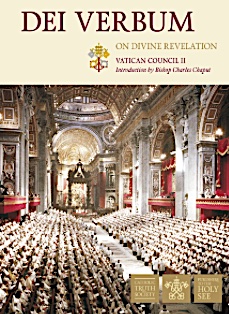
Today, we will take a closer look at the Dogmatic Constitution Dei Verbum on Divine Revelation.
It is one of the most beautiful and important documents of the Council.
To introduce it, it may be helpful to recall the words of Jesus:
“No longer do I call you servants, for the servant does not know what his master is doing; but I have called you friends, for all that I have heard from my Father I have made known to you” (John 15:15).
Dei Verbum reminds us of this fundamental point of Christian faith: Jesus Christ radically transforms humanity’s relationship with God, which is henceforth a relationship of friendship.
Therefore, the only condition of the new covenant is love.
Commenting on this passage of the Fourth Gospel, St. Augustine insists on the perspective of grace, which alone can make us friends of God in his Son (Commentary on the Gospel of John, Homily 86).
Indeed, an ancient motto states: “Amicitia aut pares invenit, aut facit”, “friendship is born between equals, or makes them so”.
We are not equal to God, but God himself makes us similar to Him through his Son.
For this reason, as we can see throughout Scripture, the Covenant begins with a moment of distance.
The pact between God and mankind is always asymmetrical. God is God, and we are creatures.
However, with the coming of the Son in human flesh, the covenant opens up to its final purpose.
In Jesus, God makes us sons and daughters and calls us to become like him, albeit in our fragile humanity.
Therefore, our resemblance to God is not achieved through transgression and sin, as the serpent suggested to Eve in Genesis 3:5, “God knows that when you eat of it, your eyes will be opened, and you will be like God, knowing good and evil.”
Rather, it is achieved through our relationship with the Son made man.
The words of the Lord Jesus that we have recalled – “I have called you friends”.
These words are reprised in the Constitution Dei Verbum, which affirms: “Through this revelation, therefore, the invisible God out of the abundance of His love speaks to men as friends and lives among them x so that He may invite and take them into fellowship with Himself” (no. 2).
(see Colossians 1:15 – He is the image of the invisible God, the first-born of all creation;
and 1 Timothy 1:17 To the King of ages, immortal, invisible, the only God, be honor and glory for ever and ever. Amen.)
(see Exodus 33:11– the Lord used to speak to Moses face to face, as a man speaks to his friend. When Moses turned again into the camp, his servant Joshua the son of Nun, a young man, did not depart from the tent.;
John 15:14-15 – 14 You are my friends if you do what I command you. 15 No longer do I call you servants, for the servan] does not know what his master is doing; but I have called you friends, for all that I have heard from my Father I have made known to you.)
(see Exodus 33:11 – Thus the Lord used to speak to Moses face to face, as a man speaks to his friend. When Moses turned again into the camp, his servant Joshua the son of Nun, a young man, did not depart from the tent.; John 15:14-15) –
In Genesis, God conversed with our first parents and engaged in dialogue with them (cf. Dei Verbum, 3); When this dialogue was interrupted by sin, the Creator did not cease seeking an encounter with his creatures or establishing a covenant with them.
In Christian revelation, God became man in his Son to seek us out, restoring the interrupted dialogue in a definitive manner. The covenant is new and eternal; nothing can separate us from his love.
Thus, the revelation of God has the dialogical nature of friendship. As in human friendship, it does not tolerate silence but is nurtured by the exchange of true words.
The Constitution Dei Verbum also reminds us of this: God speaks to us.
It is important to recognize the difference between words and mere chatter. The latter stops at the surface and does not foster communion between people. In authentic relationships, words serve not only to exchange information and news, but also to reveal who we are.
Words have a revelatory dimension that creates relationships with others.
By speaking to us, God reveals himself as an ally who invites us into a friendship with him.
From this perspective, the most important thing is to cultivate the attitude of listening so that the divine Word may penetrate our minds and hearts.
At the same time, we must speak with God/
This is not to communicate to him what He already knows, but to reveal ourselves to ourselves.
Hence the need for prayer, through which we cultivate friendship with the Lord.
First, this is achieved in liturgical and community prayer.
In these prayers, we do not decide what to hear from the Word of God. Rather, it is God Himself who speaks to us through the Church.
Second, this is achieved in personal prayer, which takes place in the interiority of the heart and mind.
Time dedicated to prayer, meditation, and reflection is essential to the Christian’s daily and weekly routine. Only through speaking with God can we speak about Him.
Experience tells us that friendships can fall apart due to an abrupt breakup or a series of daily neglects that weaken the relationship until it is lost.
If Jesus calls us to be friends, let us try not to leave this appeal unanswered.
Let us accept the call and take care of our relationship with God, for it is precisely this friendship that is our salvation.
_____________________________
Summary of the Holy Father’s words
Dear brothers and sisters,
We begin our new series of catecheses on the Second Vatican Council by examining Dei Verbum, the Dogmatic Constitution on Divine Revelation.
Today’s Scripture reading reminds us that Jesus calls us friends because he has revealed to us everything that he has heard from the Father in Christ.
Through Revelation, which reaches its fullness in Jesus, the Word made flesh, we are invited to share in God’s life as his children in Christ.
We are reminded that friendship with God is not only a gift, but also an invitation that requires a response, as in any relationship.
To cultivate this friendship, we must spend time with God in prayer, both personally and especially through the liturgy, where the community gathers to listen to the Word of God under the guidance of the Church.
Together, let us wholeheartedly respond to the Lord’s invitation and discover the true mystery of our salvation in his friendship.