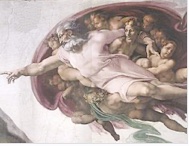
Illustration:God the Father depicted in The Creation of Adam by Michelangelo, 1510
Pope Leo’s Catechesis on Dei Verbum 2
Paul VI Hall – Wednesday, 21 January 2026
Catechesis. The Documents of the Second Vatican Council I.
Dogmatic Constitution Dei Verbum. 2. Jesus Christ, Revealer of the Father
“Do you not believe that I am in the Father and the Father in me?”
Scripture reading (john 14:6-11)
Jesus said to him, “I am the way, and the truth, and the life; no one comes to the Father, but by me.
7 If you had known me, you would have known my father also; henceforth you know him and have seen him.” 8 Philip said to him, “Lord, show us the father, and we shall be satisfied.”
9 Jesus said to him, “Have I been with you so long, and yet you do not know me, Philip?
He who has seen me has seen the Father; how can you say, ‘Show us the Father’?
10 Do you not believe that I am in the Father and the Father in me?
The words that I say to you I do not speak on my own authority; but the father who dwells in me does his works.
11 Believe me that I am in the father and the father in me; or else believe me for the sake of the works themselves.
Pope Leo’s Catechesis,
Dear brothers and sisters,
We continue our catechesis on Dei Verbum (translated: ‘the word of God’),
As we have seen, God reveals himself through a covenant dialogue in which he calls us friends.
We have seen that God reveals himself in a covenant dialogue, in which he addresses us as friends.
This is relational knowledge that not only communicates ideas but also shares a history and calls for communion in reciprocity.
This revelation is fulfilled in a historical and personal encounter in which God offers himself to us, making himself present.
In this encounter, we discover that God knows us in our deepest truth.
This is what happened in Jesus Christ.
The Document states: “The profound truth about God and about the salvation of mankind is made manifest to us by this revelation in Christ, who is both the mediator and the fullness of all revelation” (Dei Verbum, 2 – the word of God).
Jesus reveals the Father to us and involves us in our own relationship with him.
Through the Son sent by God the Father, “humans… have access to the Father in the Holy Spirit and become partakers of the divine nature”.
Through the action of the Spirit, we come to know God fully,
We are entering the relationship of the Son with his Father.
For example, the evangelist Luke testifies to this when he describes the Lord’s prayer of joy:
“At that very moment [Jesus] trembled for joy at the action of the Holy Spirit and said, ‘I bless you, Father, Lord of heaven and earth, that you have hidden these things from the wise and the intelligent, and have revealed them to babes. Yes, Father, for all this has pleased you. All things have been given to me by my father, and no one knows who the Son is except the father, nor who the father is except the son and the one to whom the son has seen fit to reveal to him”
(Luke 10:21-22).
Thanks to Jesus, we know God as he knows us
(Galatians 4:9 – now that you have come to know God, or rather to be known by God, how can you turn back again to the weak and beggarly elemental spirits, whose slaves you want to be once more?;
1 Corinthians 13:13 – faith, hope, love abide, these three; but the greatest of these is love).
In Christ, God has revealed himself to us and our true identity as his children, created in the image of the Word.
This “eternal Word enlightens all men” (Dei Verbum, 4), revealing its truth in the Father’s gaze:
“Your Father who sees in secret will reward you” (Matthew 6:4-8 – your alms may be in secret; and your Father who sees in secret will reward you. 5 “And when you pray, you must not be like the hypocrites; for they love to stand and pray in the synagogues and at the street corners, that they may be seen by men. Truly, I say to you, they have their reward. 6 But when you pray, go into your room and shut the door and pray to your Father who is in secret; and your Father who sees in secret will reward you. 7 “And in praying do not heap up empty phrases as the Gentiles do; for they think that they will be heard for their many words. 8 Do not be like them, for your Father knows what you need before you ask him), Jesus says;
He adds that “ your heavenly Father knows that you need them all“ (Matthew 6:32).
In Jesus Christ is the place where we recognize the truth of God the Father.
We discover that we are known by Him as children of the Son and are called to share in His destiny of abundant life.
St. Paul writes: “When the fullness of time had come, God sent forth his Son… so that we could receive the adoption of children. And because you are sons, God has sent into our hearts the Spirit [of his Son], who cries out: “Abba! Father!”» (Galatians 4:4-6).
Moreover, Jesus Christ reveals the Father through his humanity.
Because he is the Incarnate Word dwelling among men, Jesus reveals God to us through his true and integral humanity/
The Second Vatican Council states “To see Him is to see the Father (John 14:9), in all his presence. manifestations, words, deeds, signs, miracles, and above all in his death and glorious resurrection, Finally, it is in the sending of the Spirit of truth that revelation is made complete and confirmed
(Dei Verbum, 4).
To know God in Christ, we must accept his complete humanity.
The truth of God is not fully revealed when something is taken away from the human being, and the integrity of Jesus’s humanity does not diminish the fullness of the divine gift.
It is Jesus’s integral humanity that reveals the truth of the Father to us
(John 1:18 – No one has ever seen God; the only Son, who is in the bosom of the Father, he has made him known.).
It is not only the death and resurrection of Jesus that saves and summons us, but also his person: the Lord who becomes incarnate, is born, heals, teaches, suffers, dies, rises, and remains among us.
Therefore, to honor the greatness of the Incarnation, we must recognize Jesus as more than just a channel for transmitting intellectual truths.
Since Jesus has a real body, God’s truth is communicated through it, along with its own way of perceiving and feeling reality, and its own way of inhabiting and passing through the world.
Jesus himself invites us to share his view of reality: he says, “Look at the birds of the air, they do not sow or reap or gather into barns; and your heavenly Father feeds them. Are you not worth more than they?” (Matthew 6:26).
Brothers and sisters, by following in Jesus’ footsteps, we reach the conclusion that nothing can separate us from God’s love.
St. Paul writes, “If God is for us, who can be against us? He, who did not spare his own Son… how could he not also give us, with him, all things?” (Romans 8:31-32).
Thanks to Jesus, Christians know God the Father and abandon themselves to him with trust!