 0
0
 0
0
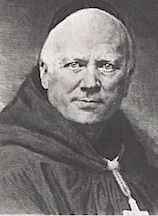
Image: Abbot Prosper Guéranger
Pope Leo’s General Audience
St. Peter’s Basilica = Wednesday, August 12, 2026
A series of catecheses – Documents of the Second Vatican Council. III.
Constitution Sacrosanctum Concilium. 6. The liturgical year
Apocalypse 1, 5-8
To him who loves us, and who by his blood has freed us from our sins, and made us a kingdom, priests to God and his Father, to him be glory and power forever and ever!
Behold, He comes from the clouds, and every eye and all who pierced Him shall see Him.
And all the generations of the earth will mourn for him. Yes: Amen.
I am the Alpha and the Omega, says the Lord God, who is, who was and who is to come, Almighty.
_________________________________
Pope Leo’s Catechesis on the liturgical year
Dear brothers and sisters,
The fifth chapter of the conciliar constitution Sacrosanctum Concilium (SC) is devoted to the liturgical year.
Today, we want to focus on this issue to demonstrate its importance in the life of every believer.
First, the term “liturgical year,” referring to the cycle of Christian feasts, became widespread in ecclesiastical language thanks to Abbot Prosper Guéranger (1805-1875), a Servant of God.
In his encyclical Mediator Dei, Pope Pius XII states that the liturgical year “is not a cold and inert representation of matters concerning past times, nor is it a simple and empty recollection of events of past centuries. Rather, it is Christ Himself who abides in His Church and continues the path of His great mercy that He began during His mortal life so that men’s souls may draw near to His mysteries and live by them. These mysteries are alive and active without ceasing”.
The liturgical year is the constant presentation of Christ’s salvific work in history.
By traversing this cycle of time, the Church remains in contact with the Lord’s redemptive actions.
Thus, all the faithful are filled with his grace.
Recalling the mysteries of redemption, the Church opens the riches of her Lord’s powers and merits to the faithful.
These are made present for all time, enabling the faithful to grasp them and become filled with saving grace.
The Church constantly strives toward the goal of encountering Jesus, who died and rose for us, placing the celebration of the Easter event at the center of each period of the liturgical year.
For this reason, the Council Fathers recognize Sunday as “the foundation and core of the entire liturgical year” and “the original feast day” (SC 106).
By a tradition handed down from the apostles, which originated on the day of Christ’s resurrection, the Church celebrates the paschal mystery every eighth day.
With good reason, then, this day bears the name of the Lord’s Day, or Sunday.
On this day, Christ’s faithful gather together to hear the Word of God and take part in the Eucharist.
In doing so, they remember the passion, resurrection, and glorification of the Lord Jesus and thank God who “has begotten them again through the resurrection of Jesus Christ from the dead unto a living hope” (1 Peter 1:3).
Therefore, the Lord’s Day is the original feast day and should be promoted to the piety of the faithful so that it may become a day of joy and freedom from work.
Other celebrations, unless they are of the utmost importance, shall not take precedence over Sunday, which is the foundation and kernel of the entire liturgical year.”).
In many modern languages, its name itself attests that it is ‘dies Domini’, or “the day of the Lord.”
Even in languages where the term “day of the sun” (Sunday) has become common, the connection with Christ is evident: Christ is the true “Sun of Justice” who enlightens everyone!
In his Apostolic Letter ‘Dies Domini’ (May 31, 1998), St. John Paul II teaches that Sunday is the Lord’s Day, the day of the Church, the day of man, and finally, the “day of days.”
Since Sunday is the Passover of the week, which recalls and makes present the day of Christ’s resurrection, it is also a day that reveals the meaning of time.
It begins with the Resurrection and imposes its own rhythm on human measures of time—months, years, and ages.
It is like a vector that permeates them and leads to the Second Coming of Christ.
Sunday prefigured the Last Day, “the Day of the Parousia” (n. 75) [2], when we will all be resurrected.
Sanctifying Sunday requires celebrating the Eucharist.
According to the Council Fathers, listening to the Word of God and participating in the Body of Christ presuppose a “come together as one” (SC, 106), that is, a festive assembly of the faithful.
Through it, the Christian community visibly manifests its communion with the Lord, bearing witness to its belonging to Christ and fidelity to the Church.
This assembly cannot be replaced by virtual presence alone nor reduced to passive participation.
In fact, the liturgical assembly is accomplished through the active participation of brothers and sisters called together to “give thanks to God, who through the resurrection of Jesus Christ has regenerated our living hope” (1 Peter 1:3).
Blessed be the God and Father of our Lord Jesus Christ!
By his great mercy, we have been born anew to a living hope, to an inheritance that is imperishable, undefiled, and unfading, kept in heaven for you.
In this regard, I encourage everyone to create the best possible conditions so that those who cannot abstain from work on Sunday can also participate in Holy Mass.
The liturgical year, whose rhythm is determined by Sundays, has an interesting history in which the faith and piety of the Church are intertwined.
From the second century CE onwards, the weekly Passover celebration was joined by the annual Passover celebration, “the greatest solemnity” (SC, 102), which was extended over a joyful period of fifty days.
This period culminated in Pentecost and was preceded by penitential Lent (SC, 109).
The season of Lent has a twofold character.
Primarily, it recalls or prepares for baptism and penance.
It disposes the faithful to celebrate the paschal mystery by having them hear the word of God more diligently and devote themselves to prayer.
This dual character should be emphasized more in the liturgy and in liturgical catechesis.
Hence:
a) More use should be made of the baptismal features proper to the Lenten liturgy.
Some of these features, which used to flourish in bygone days, should be restored as deemed appropriate.
b) The same applies to penitential elements.
Regarding instruction, it is important to impress upon the faithful not only the social consequences of sin, but also the essence of the virtue of penance, which leads to detesting sin as an offense against God.
The role of the Church in penitential practices should not be overlooked, and the people must be encouraged to pray for sinners.
The subsequent development of the Christmas cycle, modeled on the Paschal cycle, made it possible to relive the mysteries of the Incarnation of the Word of God, his birth, and his revelation to the world.
The Church incorporated the veneration of the Blessed Virgin Mary, “inseparably linked to the saving work of her Son” (SC, 103), and “the memories of the martyrs and other saints who sing perfect praise to God in heaven and intercede for us” (SC, 104) into the various periods of the liturgical year.
Thus, the liturgical year presents the pedagogy of salvation history in sacramental form, leading the faithful from waiting for the Messiah to the fullness of the Paschal Mystery and the announcement of future glory.
Throughout the year, the Church celebrates the salvific significance of the mystery of Christ, allowing the faithful to participate more fully in it.
For this reason, the liturgical year is an essential source of inspiration and a fundamental point of reference for all pastoral activities.
______________________________
Summary of the Holy Father’s catechesis
The Constitution Sacrosanctum Concilium presents the liturgical year — consisting of a cycle of Christian feasts — as the most important point of reference for pastoral action.
Sunday, “the Lord’s Day” and the oldest holiday, is its “basis and core.”
As St. John Paul II pointed out in his Apostolic Letter Dies Domini, Sunday is “a day that reveals the meaning of time.”
Since Sunday is the Passover of the week, recalling and making present the day of Christ’s resurrection, it reveals the meaning of time.
Unlike the cosmic cycles to which natural religion and human culture often refer to measure the passage of time and the myth of eternal return, Christian Sunday has no connection to them.
Christian Sunday is different! It begins with the Resurrection and imposes its own rhythm on human measures of time—months, years, and ages.
It permeates these measures and leads to the Second Coming of Christ.
Sunday prefigured the Last Day, the Day of the Parousia, which was foreshadowed by the glory of Christ revealed at the moment of the Resurrection.
Indeed, everything that will happen until the end of the world is merely an extension of what occurred on the day the martyred body of the Crucified One was resurrected by the Holy Spirit, becoming the source of that Spirit for humanity.
Therefore, the Christian knows that he does not have to wait for another time of salvation because the world, no matter how long it lasts, is already living in the end times.
The glorified Christ sustains and guides not only the Church but also the entire universe.
Under the influence of this vital force, the creature, which “has been groaning in labor pains until now” (Rom. 8:22), is moving toward its ultimate redemption.
Humans can only vaguely perceive this process, but Christians are guaranteed and certain of it.
The celebration of Sunday is an essential witness to this, so that human measures of time may always be based on hope.
The celebration on Sunday mainly consists of active participation in the Eucharist, which cannot be replaced by a virtual broadcast. E
aster has been celebrated since the second century A.D. and is the largest annual celebration.
The celebration lasts fifty days, beginning with Easter and ending with Pentecost.
The second cycle of the liturgical year relates to the Christmas season.